Hotel Cancellation Policy: How to Avoid Fees and Get a Full Refund
A hotel cancellation policy is one of the least exciting things you will read before a trip — and one of the most expensive if you skip it. Every time you book a room, you agree to a set of deadlines and penalties that determine whether a last-minute change costs you nothing or takes the full price of your stay out of your pocket. The rules are rarely standardized: a Marriott in downtown Chicago, a boutique hotel in Lisbon, and an Airbnb-style apart-hotel in Bangkok can all handle cancellations completely differently, even when their nightly rates look similar.
The good news is that the terms are almost always stated clearly at checkout — you just have to know where to look and what the phrasing actually means. This guide explains how hotel cancellation policies work across different booking channels and rate types, what the standard windows are, and the practical steps for getting a refund when your plans fall apart. If you tend to book first and read the fine print later, the ten minutes you spend here could save you hundreds of dollars per trip.
What Is a Hotel Cancellation Policy?
A hotel cancellation policy is the set of rules a property sets for what happens when you cancel a reservation. It answers three questions: how late you can cancel for free, what you owe if you cancel after that deadline, and whether any portion of your booking is refundable at all. Most policies are built around a “free cancellation” cutoff, measured in hours or days before your scheduled check-in, typically 24, 48, or 72 hours.
The specific terms depend on four things. First, the rate type you chose: a fully flexible “best available rate” almost always costs more per night than a deep-discounted “non-refundable” rate, and that premium is what buys you the right to walk away. Second, the booking channel: direct bookings through the hotel’s own website often have friendlier rules than third-party sites, because the hotel is not paying a commission and wants to keep you as a repeat guest. Third, the timing of your stay: peak-season dates, conventions, and special events frequently carry stricter policies. Fourth, the property category: resorts and all-inclusives are known for longer windows and stiffer penalties, since a last-minute empty room on a booked-out island is hard to resell.
The key number to memorize is your “cancel-by” date and time. That is the moment your booking flips from fully refundable to partially or entirely non-refundable, and it is always tied to the hotel’s local time, not yours.
The Standard 24-to-48-Hour Cancellation Window
The most common hotel cancellation policy in the United States and much of Europe requires you to cancel by 24 or 48 hours before check-in to avoid a charge. Miss that line and the hotel will typically bill you for one night, sometimes the full length of the stay. The 24-hour window is the industry default: you can cancel your room up to 4 p.m. or 6 p.m. the day before arrival and owe nothing, but cancel the morning of and you are charged. Business hotels in city centers favor this model because they fill rooms quickly on short notice.
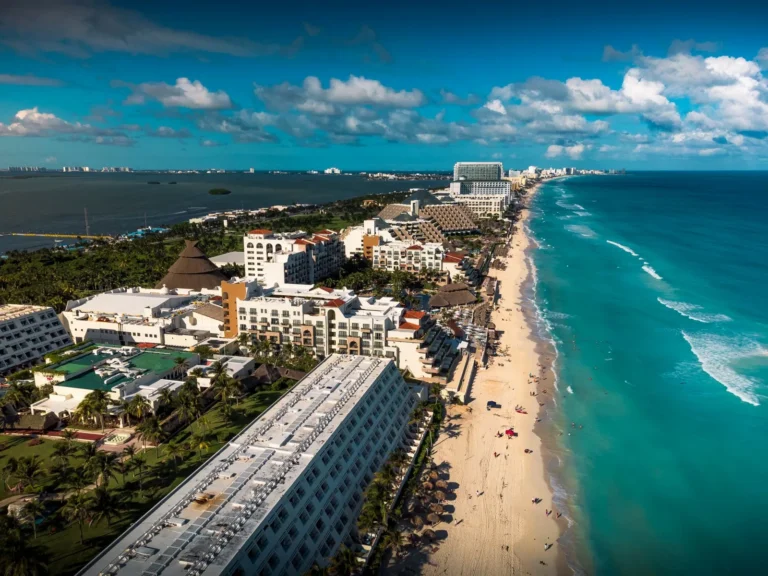
Resorts, vacation rentals through property managers, and hotels in high-demand destinations often extend the window to 48 or 72 hours. The logic is straightforward: an all-inclusive in Cancun cannot realistically resell your room to a walk-in at the front desk, so it protects itself with a longer deadline. Some properties go further and enforce a strict 14-day or 30-day cancellation policy for peak dates or full-stay prepayments.
Here are the most common deadline formats you will encounter:
- 24 hours before arrival — the most common; cancel by the front desk cutoff time the day before check-in.
- 48 hours before arrival — common at resorts and premium leisure properties.
- 72 hours before arrival — frequent at all-inclusives and over major holidays.
- 7, 14, or 30 days before arrival — typically applied to non-refundable packages, group rates, or peak-season stays.
One detail people consistently miss is the penalty structure. Canceling inside the window usually means a one-night charge, but some hotels — especially in Asia and at luxury resorts — charge the full stay if you cancel within 72 hours. Read the exact wording before you click “book,” because the difference between one night and five nights is the difference between an annoying $180 and a painful $900.
Refundable vs. Non-Refundable Rates
Almost every modern booking flow shows you two prices side by side, and the gap between them is the entire economics of cancellation policies. The refundable rate charges you more per night but lets you cancel without penalty until the stated deadline. The non-refundable rate cuts the price — sometimes by 15% to 30% — in exchange for giving up that right entirely. If you cancel a non-refundable booking for any reason, you generally forfeit the full prepayment.
The tradeoff is worth quantifying before you decide, because the “savings” can be misleading. On a three-night stay at $200 per night, a non-refundable rate of $160 saves you $120 — but it puts $480 at risk. If there is a realistic chance your plans will shift, paying the extra $40 a night is cheap insurance against losing the entire booking.
The table below lays out how the two rate types compare on the factors that actually matter when plans change.
| Factor | Refundable Rate | Non-Refundable Rate |
|---|---|---|
| Nightly price | Higher, often 10–30% more | Lower, usually the cheapest listed |
| Free-cancel window | Yes, usually 24–72 hours | None |
| Refund if you cancel | Full refund before the cutoff | Usually zero, full prepayment forfeited |
| Date changes | Often flexible | Rarely allowed, or with a penalty fee |
| Best suited for | Unsteady schedules, long lead times | Locked-in dates, big savings on long stays |
A middle option is becoming more common: the semi-flexible rate, which lets you cancel for free up to a week out but charges one night inside that window. Airlines have conditioned travelers to expect this kind of tiering, and hotels are following suit as dynamic pricing gets more sophisticated.
How Third-Party Booking Sites Handle Cancellations
If you booked through a site like Booking.com, Expedia, or an OTA bundle, your hotel cancellation policy is layered on top of the platform’s own rules. The hotel still sets the core cancellation terms, but the platform applies them and handles the refund, which adds a step and occasionally a wrinkle. The Booking.com model is the most traveler-friendly of the big three: many listings clearly filter for “free cancellation,” and the site displays the exact cancel-by deadline in your local time zone before you pay.
The wrinkle is that refunds through third parties are not instant. When you cancel an Expedia or Booking.com reservation, the platform tells the hotel, the hotel releases the charge with its payment processor, and the money travels back through the platform to your card — a process that can take 3 to 10 business days. People who cancel the day before a trip and expect the money back immediately are often frustrated by this lag, but it is normal, not a scam.
There are three rules to follow when booking through an OTA:
- Compare the same rate directly on the hotel’s website. Many hotels price-match and offer a better cancellation window to direct-bookers, plus loyalty points.
- Screenshot the cancellation terms at checkout. Policies get updated, and having the exact wording you agreed to is your best evidence in a dispute.
- Be wary of opaque “mystery” deals. Rock-bottom OTA prices almost always carry non-refundable terms; the discount exists because you are absorbing the cancellation risk.

How to Check a Hotel Cancellation Policy Before You Book
Finding the exact hotel cancellation policy takes thirty seconds if you know the three places it hides. First, on the rate selection page, each rate card lists its cancellation terms in small print just below the price — look for phrases like “free cancellation until 6:00 p.m.” or “non-refundable.” Second, the final booking summary, shown right before you click confirm, restates the policy and should always be read last, because it overrides any impression you formed earlier in the flow. Third, the confirmation email you receive after booking is your permanent record; the cancellation deadline and penalty are always listed there.
When the wording is vague — which happens more than it should — call or message the property and ask three direct questions: “What is the exact date and time I can cancel for free?”, “What am I charged if I cancel after that?”, and “Is there any fee to change my dates instead of canceling?” Getting the answer in writing, even in a chat window, converts a vague policy into an enforceable one.
If you want to dodge the fine print entirely, filter for free-cancellation listings on Booking.com or Expedia, and check the box for flexible rates on the hotel’s own site. A flexible rate will rarely be the rock-bottom price, but it converts a gambling decision into a predictable one — and for most leisure travelers, that predictability is worth the small premium.
What to Do If You Need to Cancel Late
Plans change, and sometimes they change inside that 24-hour window. Before you accept a one-night charge, there are moves that genuinely work. The most effective is to cancel and rebook rather than just cancel: if you plan to return, ask the hotel to move your reservation to future dates instead of refunding it. Many front desks will waive the fee entirely to hold your business, because a rescheduled booking keeps revenue on their books.
The second lever is a legitimate reason paired with documentation. Hotels are not obligated to waive fees for ordinary changes of mind, but they routinely make exceptions for medical emergencies, flight cancellations, and family situations — especially if you provide proof such as a doctor’s note or an airline cancellation notice. Call a human rather than emailing; speaking to the front desk or reservations manager is measurably more effective than an automated form.
Third, lean on travel insurance or a card benefit. A comprehensive travel insurance policy with “trip cancellation” coverage will reimburse you for non-refundable hotel charges when you cancel for a covered reason like illness or a natural disaster. Many premium credit cards, including the Chase Sapphire Reserve and the Amex Platinum, carry their own trip-cancellation protection that can recover hotel penalties — though “cancel for any reason” coverage, which pays out for changes of heart, is almost always an extra-cost add-on.
For current rates and deeper guidance, the research team at U.S. News Travel keeps regularly updated references worth bookmarking.
Frequently Asked Questions
Can I get a refund if I booked a non-refundable hotel room?
Usually not in cash, but you have options. Hotels will sometimes convert a non-refundable booking into a credit for future dates, or refund you as a goodwill gesture in genuine emergencies with documentation. If the hotel refuses and you have travel insurance or a card with trip-cancellation coverage, file a claim there instead.
What is the most common hotel cancellation deadline?
24 hours before arrival is the industry standard, meaning you can cancel by the hotel’s stated cutoff time — often 4:00 or 6:00 p.m. — the day before check-in without paying. Resorts and all-inclusives more commonly use 48- or 72-hour windows, and peak dates can stretch to a week or more.
Does my hotel cancellation policy differ if I booked through Expedia or Booking.com?
The hotel sets the core rules, but the platform applies them and handles the refund, which adds a 3-to-10-business-day processing delay. Always check the exact deadline shown on the platform before paying, and compare the same rate directly on the hotel’s website, where the window is sometimes longer.
Can I change my hotel dates instead of canceling?
Frequently, yes — and it is often the cheapest path. Many hotels allow one free date change on a flexible rate, and some will waive change fees on non-refundable rates rather than lose you entirely. If your plans shifted rather than vanished, ask about rescheduling before you ask about a refund.
How long does a hotel refund actually take?
Direct hotel bookings typically refund in 3 to 5 business days, while third-party refunds through OTAs often take 5 to 10 business days because the money has to pass back through the platform. Credit-card statements can lag another few days after the hotel has already processed the return.
The Bottom Line
A hotel cancellation policy is essentially a small insurance contract hidden in the rate you choose, and the cheapest rate is rarely the smartest one. The practical playbook is simple: know your cancel-by deadline in the hotel’s local time, decide whether a flexible rate’s premium is worth it given how stable your plans are, and book direct when you can for the friendliest terms and the fastest refunds.
Before your next trip, spend thirty seconds checking the policy on the confirmation email, and set a calendar reminder for your cancellation deadline as soon as you book. If you are comparing hotels for an upcoming stay, it is worth weighing cancellation flexibility right alongside the resort fee cost that some properties bury in the fine print, and understanding how an all-inclusive resort vs. hotel matchup affects how strict those terms tend to be. When you are ready to book, luxury beach resort deals can look tempting at first glance — just confirm whether that bargain rate is truly flexible before you commit. A room that is easy to cancel is worth a few extra dollars a night, because the moment your plans change, that policy is the only thing standing between you and a refund.